
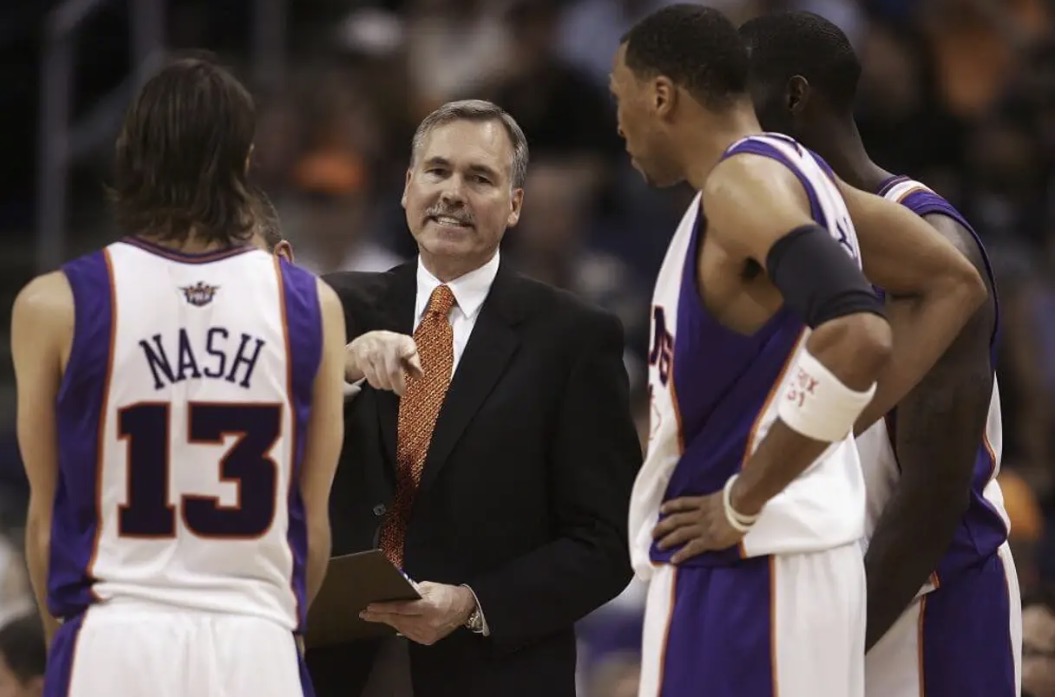
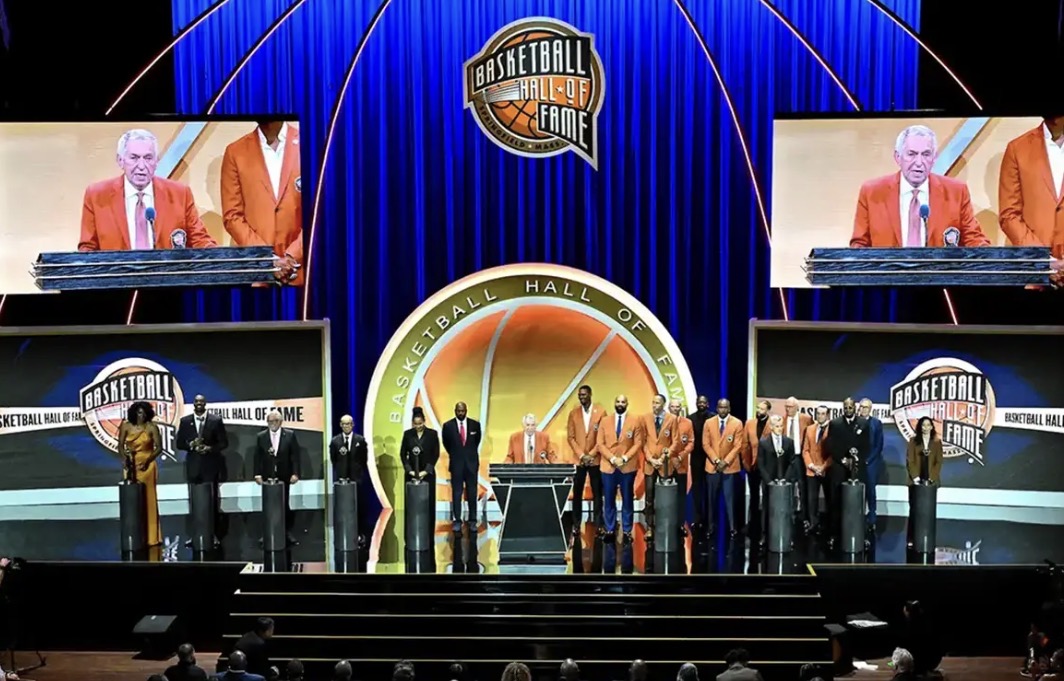
Iako je bio jedini finalista u internacionalnoj kategoriji i prošle godine, a i ove, ime Dušana Ivkovića opet nije prozvano na ceremoniji u Springfildu u kojoj je u Predvorje slavnih nazvano po Džejmsu Nejsmitu primljen Majk D’Antoni, doduše ne kao internacionalac, nego kao “običan” contributor.
Uz D’Antonija u Springfildu je od sinoć i ženska reprezentacija SAD-a iz 1996. godine, koja je postavila temelje za modernu žensku košarku. Među istaknutim igračicama u tom timu sa OI iz Atlante su Kendis Parker, Elena Dele Don i Šamika Holdskla koje su u Hol of fejm primljene i kao individue, dok je u muškoj konkurenciji primljen upravo učesnik u D’Antonijevoj “košarkaškoj revoluciji” iz njegovih dana u Finiksu od 2003-2008, šestostruki NBA Ol-star Amari Stodamajer. Trenersku struku na ceremoniji uz D’Antonija upotpunili su i Dok Rivers i Mark Fju, a u Kuću slavnih je uvršten i dugogodišnji NBA sudija Džou Kroford.
Očekuje se da bi naš Duda Ivković mogao biti posthumno primljen naredne godine, a odmah iza njega i još jedan naš velikan – Kinđe Delibašić.
Evo teksta na engleskom jeziku koji je 2021. godine za Koš magazin napisao slavni trener Dan Piterson o svom nekadašnjem igraču Majku D’Antoniju koji sjajno opisuje ogroman uticaj D’Antonija na modernu košarku.
***
| There’s no question: NBA offenses are different now, and D’Antoni’s a big reason why. The game has never been faster. The offense has never been more potent. Players loaded with skill are weaponized with speed and space. The league has essentially mainlined “Seven Seconds Or Less” basketball in its veins. D’Antoni loves NBA basketball today. I wondered: Does D’Antoni get any satisfaction in that? The premise makes him uneasy—that D’Antoni, the son of a teacher in a West Virginia coal mining town—was responsible for all this. He stammers at the thought. Initially, he diplomatically answers by giving credit to the players and then giving due to the coaching pioneers before him in the ABA and elsewhere. “We did something unique in Phoenix and I’m proud of it,” D’Antoni says. “The overall fact is that we were just a little ahead.” The Suns’ revolution When D’Antoni was made the interim head coach of the Phoenix Suns in 2003-04, the league was dominated by Shaquille O’Neal, who had won three championships in four straight Finals runs. Tim Duncan was in his prime. Kevin Garnett, whom his former coach Flip Saunders jokingly claimed was actually 6-foot-13, won MVP as a power forward. In 2003-04, all three were first team All-NBA, positions be damned. And then, there were the Suns. While giants ruled the land, the Suns signed Steve Nash, slid starting center Jake Voskuhl to the bench and won 62 games with 6-foot-10 Amar’e Stoudemire as its starting five-man. “You’re not going to beat Shaq if you rolled out a conventional center—he’s going to destroy him,” D’Antoni says. “You’re just playing for second place, basically. We had Nash and Stoudemire and we thought, ‘Well, why not?’ Let’s try this.” |
| D’Antoni felt that Nash and Stoudemire would be unguardable in space, and the do-everything star Shawn Marion could thrive at the four. D’Antoni designed an up-tempo offense that got out in transition, utilized a spread pick-and-roll with shooters patrolling the perimeter, and empowered guards who–thanks to a rule change–couldn’t be hand-checked anymore. Quentin Richardson, a shooting guard who was signed in the offseason, started in Voskuhl’s place and Q-Rich promptly led the NBA in 3s. “It just exploded,” D’Antoni says. The Suns had flipped the NBA upside down, and swept the MVP, Coach of the Year, and Executive of the Year awards. The Suns led the NBA with 15.2 pick-and-roll points per game, 24.7 3-point attempts per game, and 95.9 possessions per 48 minutes. Over time, those three pillars of D’Antoni basketball—pick-and-rolls, 3-pointers, and speed—have become essential ingredients of the modern NBA. To illustrate the league’s transformation toward D’Antoni ball since then, consider that those same marks by the 04-05 Suns team would rank last in all three categories in today’s NBA. In the 2006 book “Seven Seconds Or Less,” Hall of Fame author Jack McCallum laid out some of D’Antoni’s words of basketball wisdom: “Most coaches believe defenses are more vulnerable late in the shot clock, that you can get them out of position with a lot of passing. I don’t know why defenses wouldn’t be more vulnerable before they get set. That’s why we play fast.” “People say that when you play fast you’ll be a high-turnover team. I think you’ll be a low-turnover team because you don’t throw as many passes.” I’ll hear people say, ‘You blew a big lead because you play fast.’ Well, hell, did they say that before we got an eighteen-point lead? Playing fast is how we got the lead.” “I’ve heard you don’t lose the game in the first five minutes, but if you get down six in the first five minutes, then you lose by five, didn’t you lose the game in the first five minutes? I’m from West Virginia but I took a little math.” Looking back, D’Antoni wishes there had been more math in Phoenix. “I’ve told Steve (Nash) a thousand times—we didn’t go far enough with our approach because we didn’t have analytics,” D’Antoni says. “Everybody was killing us about how we were playing. Too many threes, they said. Live by the 3, die by the 3, blah blah blah. If I hear that one more time, I’m going to throw up.” With the Suns teams, the Nash/D’Antoni debate became a chicken-or-egg debate. Were the Suns revolutionary because of Nash or because of D’Antoni? The two work hand-in-hand. The same could be said of D’Antoni and the analytical movement, which didn’t take over the sport until about a decade later. “I think the analytic people have definitely influenced everything,” D’Antoni says. “We were kind of doing it in Phoenix before we had validation from analytic people.” |
| This does win titles After winning the 2012 NBA title by going small and unleashing positionless basketball, Heat coach Erik Spoelstra grabbed his phone and started sending thank-you texts to some of his mentors and most influential innovators. One of the first texts he sent was to D’Antoni. The message? “This one’s for you. We climbed the mountaintop.” D’Antoni laid down the groundwork for Spoelstra to boldly start Shane Battier at power forward as his version of Shawn Marion instead of going with double bigs against David West, Roy Hibbert, and the Indiana Pacers. In the 2012 Finals against Thunder redwoods Serge Ibaka and Kendrick Perkins, the Heat downsized with Chris Bosh at the five and had him space the floor with 3-point missiles. The strategy led to Spoelstra’s first championship as the Heat’s head coach. In Spoelstra’s mind, D’Antoni deserved some flowers. A fully weaponized James Harden The NBA world changed in the 2016 NBA Finals: LeBron slayed the Warriors, which led the Warriors to re-tool with Kevin Durant. But also, the day before Game 1, James Harden got a new coach. This was not a well-received hire. The previous season, Kevin McHale was fired after 11 games and interim coach J.B. Bickerstaff led the team to a 41-41 record with Harden. That summer, Rockets owner Leslie Alexander and general manager Daryl Morey (also the face of the NBA’s analytics movement) brought in D’Antoni, who was coming off stints with the Lakers and Knicks–memories of Phoenix had dimmed. Seven Seconds Or Less was either a distant memory or, at worst, a shining example of how not to win a championship. Alexander opened the press conference announcing D’Antoni’s hire by denouncing the naysayers that had filled the local airwaves. At the press conference, sitting between Alexander and Morey, D’Antoni was asked about the doubters who criticized his hiring. D’Antoni didn’t punch back. He was quick to tell the audience that Alexander was one of the best owners in sports. And that was important to him. “One thing I’ve learned,” D’Antoni said, “is when ownership and the general manager want to play a certain style, I want to coach a certain style, and they all align, then you have a chance. It’s not foolproof, but you have a chance to succeed. As one of the last shots that I’ll have going forward, that’s why I wanted this chance to get it all right and try to get to my vision that I think how basketball should be played. I think we can win that way, and I’ll do everything I can to make it successful.” How basketball should be played. The next season, D’Antoni won Coach of the Year again after finishing with a 55-27 record with only one player—Harden—who had ever been an All-Star. The loaded Golden State Warriors—with All-Stars all over the roster—were the only team to register a better offense. The Rockets bucked convention. D’Antoni put the ball in Harden’s hands, spread the floor and more often than not, magic happened. Not a point guard by any traditional standard, Harden led the league in assists, commanding the offense with authority. Harden’s average time of possession skyrocketed from 6.6 minutes per game in 2015-16 to 9.3 minutes per game under D’Antoni. The Rockets were the first team in NBA history to take more than 40 3-pointers per game, obliterating the previous high of 32.7. They almost never took long 2s, preferring to attack the rim and rain from deep almost exclusively. Under Morey’s leadership, the Rockets had already started moving away from long 2s and launching more 3s, but the approach went into overdrive with D’Antoni at the helm and they pushed the Durant-Warriors further than any team in the NBA. “It’s good to think that I wasn’t completely crazy,” D’Antoni says. “That’s all.” NBA players shoot way more 3s than ever, at the expense of long 2-pointers. The number of shots close to the rim has been fairly steady. Before D’Antoni took the Houston job, 16.2 percent of NBA shots were 2-pointers from beyond 16 feet. Five seasons later, that number has been sliced to 7.3 percent. D’Antoni’s offense is famous for what it did for guards, but the league in his image has been incredible for certain big men. Stoudemire wrote the book. Clint Capela went from Dwight Howard’s backup to leading the league in field goal percentage under D’Antoni. D’Antoni understood that spacing would open up the paint for more layups and dunks. What’s often missed in the dialogue surrounding the 3-point revolution in the NBA is that the percentage of shots taken in the paint hasn’t wavered much, and field goal percentage inside three feet is the highest that it has ever been. By playing in more space, bigs like Zion Williamson, Giannis Antetokounmpo, Nikola Jokic, and Joel Embiid are the most efficient scorers in league history. “We have so many skilled big guys in this league that are so freaking good,” D’Antoni says. “To say that the death of the big man or whatever, it’s crazy. They’ve gotten so adept at ball-handling and shooting, I think it’s great to see. I love to watch NBA basketball, to watch the talent of the players, it’s amazing to me.” Almost a decade later, the game features more Shane Battier-and-Chris Boshs than David West-and-Roy Hibberts. Spacing bigs are everywhere. The Lakers went big most of the season—until Game 6 of the Finals when coach Frank Vogel ditched that plan and started guard Alex Caruso instead. The Lakers ran the Heat off the floor and clinched the title. In Utah, a basketball experiment is unfolding. Rudy Gobert may be the closest thing to Roy Hibbert—that is, not exactly a D’Antoni prototype—but the Jazz feature many of the same hallmarks of those Suns squads. The Jazz take more 3-pointers than any team in the NBA, lead the NBA in pick-and-rolls, and thrive with the accelerator pressed to the floor. The Brooklyn Nets assistant coach turns 70 next month, and loves his current role. “I sleep so much better,” D’Antoni says laughing. “I tell Steve (Nash) all the time: I hate it when we lose, but I’m gonna go home and go to bed. You need to worry about this shit for tomorrow.” Despite the Jazz’s dominance, it’s the Brooklyn Nets who are favored to win the title this summer. The league has shifted toward D’Antoni ball and many teams are reaching historic levels by following his blueprint. Revolution is cool, but so is a ring. “Sure, it gives you a little satisfaction,” D’Antoni says. “But I’ll tell you what, I’d trade that satisfaction for a championship.” |
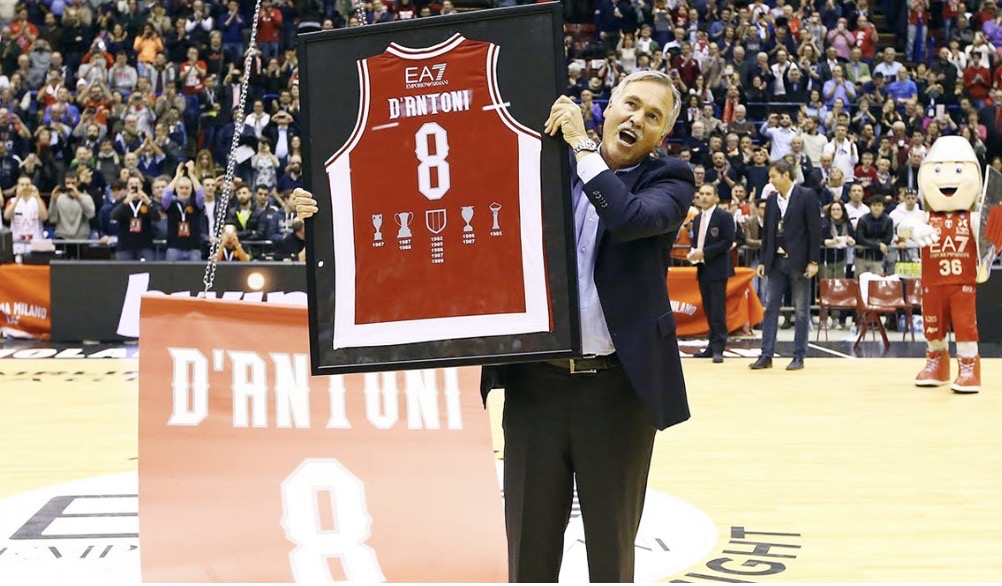
Photo: Jeff Gross/Getty Images, HoopHall.com, Giuseppe Cottini/Euroleague Basketball via Getty Images
